
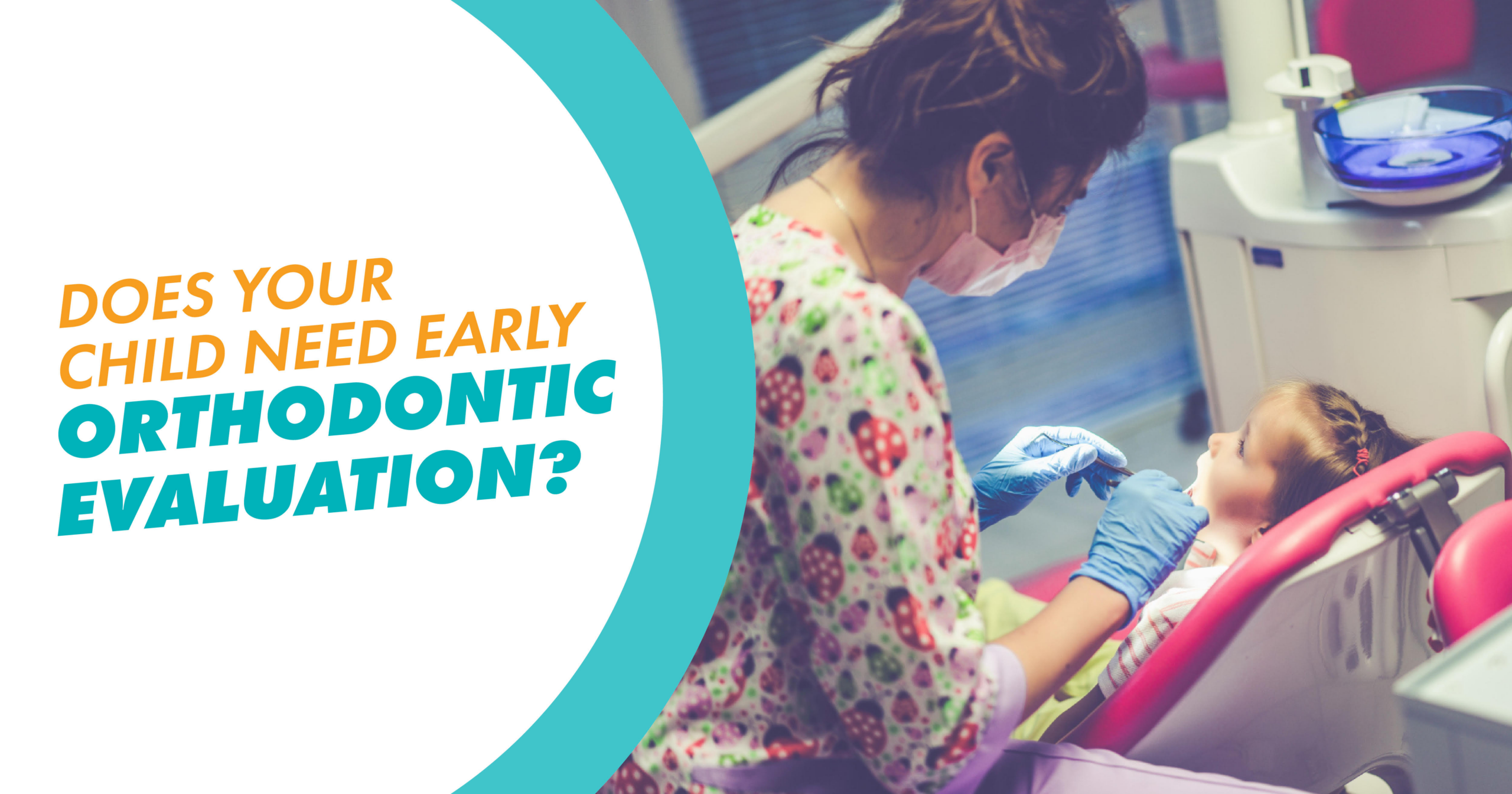
An early orthodontic evaluation isn’t meant to start treatment early. It’s to determine whether your child needs treatment early, requires monitoring, or simply has normal development.
Do you think crooked teeth or obvious jaw misalignment are the only signs that your child may benefit from an early orthodontic evaluation?
The truth is, a lot of growth and development concerns have nothing to do with the appearance of their smile.
The American Association of Orthodontists (AAO) recommends all kids have an orthodontic evaluation by age 7, even if everything looks normal, because seemingly unrelated habits and symptoms can signal underlying orthodontic issues that can be much easier to address while your child is still growing.
In this post, our Naperville orthodontists share 10 surprising signs your child needs an early orthodontic evaluation.
Does Every Child Need Early Orthodontic Treatment?
No. An Evaluation Does NOT Mean Your Child Needs Braces.
One of the biggest misconceptions about orthodontics for kids is that visiting an orthodontist at age 7 automatically means treatment.
In reality, the goal is simply to make sure your child’s teeth, jaws, and facial development are progressing as they should. Think of it like routine vision or hearing screenings.
Often, the best recommendation is simply “Let’s watch and monitor.” The AAO notes that some children will not need treatment at the initial visit and may simply be followed periodically as their teeth, jaws, and face continue to develop.
However, if they do notice certain emerging problems, intervening with Phase 1 orthodontics before your child has all of their permanent teeth can achieve results that may not be possible later in life.
What Happens During an Early Orthodontic Evaluation?
The orthodontist evaluates:
- Tooth eruption and timing
- Available space for permanent teeth
- Upper and lower jaw relationships
- Crossbites and functional shifts
- Overbite and overjet
- Facial symmetry
- Oral habits
- Missing, extra, impacted, or ectopically erupting teeth
- Whether treatment is needed now—or whether observation is the best option
What are the Signs Your Child Needs an Early Orthodontic Evaluation?
1. Your Child Breathes Through Their Mouth
While occasional mouth breathing when your child has a cold is nothing to worry about, consistent mouth breathing can indicate that the upper jaw, also known as the palate, is not wide enough.
Why does that matter? Well, the palate forms the floor of the nose, and it takes its normal shape through tongue activation, especially during swallowing. When it’s too narrow, so is the nasal airway, which makes it more difficult for children to breathe comfortably through their nose, which may also affect normal speech.
Over time, chronic mouth breathing can influence facial growth, jaw development, behavior, sleep quality, and how the permanent teeth erupt.
That’s why, even if your child doesn’t end up needing early treatment, it’s absolutely worth mentioning persistent mouth breathing at their orthodontic evaluation.
For some kids, we may recommend maxillary expansion using a palatal expander to gently widen the upper jaw and open the airway.
Not into the idea of having to activate your child’s expander with a key? At Innovative Orthodontic Centers, we offer the Invisalign® Palatal Expander system, a removable alternative to traditional metal expanders.
2. They Lost Baby Teeth Much Earlier (or Later) Than Expected
Not only do baby teeth help kids bite, chew, and speak clearly, they also act as placeholders for the permanent teeth developing underneath.
When a baby tooth falls out too early because of decay, injury, or another reason, nearby teeth have a tendency to drift into the empty space. This increases the risk of crowding, impacted teeth, or bite problems later.
The opposite can also be true. If baby teeth don’t fall out when expected, they can block permanent teeth from erupting properly or cause them to come in behind or beside the baby teeth.
Every child develops at a different pace, so there’s no need to panic if your child’s smile timeline looks slightly different from a friend’s.
However, significant delays or premature tooth loss are signs your child needs an early orthodontic evaluation. Sometimes, the fix can be as simple as using a dental space maintainer or having a stubborn baby tooth extracted.
3. They Have Trouble Biting or Chewing Food
If your child only chews on one side of their mouth, avoids crunchy foods, or struggles to bite into things like apples or sandwiches, a misaligned bite could be the culprit.
Problems such as crossbites, open bites, overbites, and underbites commonly interfere with normal chewing and place additional stress on the jaw joints.
Some issues can wait, while others like an underbite or crossbite could benefit from Phase 1 treatment. The only way to know for certain is with an orthodontic assessment.
4. Thumb Sucking or Tongue Thrusting Continues Beyond the Toddler Years
Thumb sucking is normal for infants and young children. But when the habit continues beyond early childhood, it can affect the development of the teeth and jaws.
Likewise, tongue thrusting, where the tongue pushes against the front teeth while swallowing or speaking, can gradually move teeth out of position.
These habits can contribute to:
- Open bites
- Narrow upper jaws
- Protruding front teeth
- Speech difficulties
- Bite problems
Getting guidance on how to stop the habit or, when necessary, using a habit-breaking appliance can help prevent permanent changes.
5. They Have Speech Issues
Speech difficulties are another one of the surprising signs your child needs an orthodontic evaluation. While not every speech problem is related to your child’s dental and facial structures, jaw discrepancies can impact how kids produce speech sounds.
For example, an open bite, narrow palate, or improper tongue position can cause challenges, particularly with sounds like “s,” “z,” “th” or “sh.”
Speech therapists and orthodontists often work together when a child’s bite is connected to speech concerns.
6. They Grind or Clench Their Teeth
Mild teeth grinding (known as bruxism) is relatively common in children, but persistent nighttime grinding could be a sign that their bite isn’t functioning as efficiently as it should.
Chronic teeth grinding in kids can lead to:
- Worn or chipped teeth
- Tooth sensitivity
- Jaw discomfort
- Headaches
- Strain on the jaw joints
Grinding doesn’t mean your child definitely needs Phase 1 orthodontics, but it’s one of several symptoms our orthodontists consider when evaluating bite development.
7. Their Jaw Clicks, Pops, or Shifts When They Bite or Open
Differences in jaw growth can cause a child’s jaw to make noises, shift noticeably when opening, or move unevenly.
An early orthodontic evaluation lets the orthodontist keep an eye on it and intervene if necessary.
8. They Frequently Bite Their Cheeks or the Roof of Their Mouth
Does your child regularly complain about accidentally biting the inside of their cheeks? Or have they mentioned that they sometimes bite the roof of their mouth when they eat?
Frequent cheek, lip, or palate biting can sometimes indicate that the teeth aren’t fitting together properly.
Bite problems such as overbites (deep bites) and crossbites are notorious for causing the teeth to hit the cheeks, lips, or palate when biting down.
If this is something you’ve noticed, an orthodontic checkup can determine the underlying reason and whether treatment can help.
9. Their Face Appears Uneven or Asymmetrical
Most people have small, virtually unnoticeable differences between the left and right sides of their face. However, discrepancies in jaw development can cause visible facial asymmetry or imbalances like a protruding or receding chin.
When a child has an issue such as crossbite, they often compensate by shifting the jaw to one side, which can worsen the problem.
The good news is that because kids’ jaw and facial bones are still growing, early orthodontic treatment can help to guide them into optimal positions to improve facial symmetry and harmony.
10. Everything Looks Normal, but Your Child Has Never Had an Orthodontic Evaluation
This might be the most surprising sign of all. A lot of parents assume that if their child’s teeth look straight and they aren’t complaining of any problems, there’s no reason to see an orthodontist. But many orthodontic issues aren’t obvious to the untrained eye.
Orthodontists have specialized training in recognizing even the most subtle problems.
Chances are, you’ll leave the first orthodontic visit with reassurance that everything looks good, but if your child is diagnosed with a developing problem, early detection is key.
Are These Also Signs Your Child May Need Braces?
Are these red flags also signs your child may need braces? Maybe, but not necessarily.
When your child has an orthodontic evaluation at age 7, braces are rarely, if ever, the first step. Again, most kids won’t need any treatment right away.
Phase I can involve skeletal, dentoalveolar, eruption, space, habit, and bite-related objectives.
Depending on the diagnosis, early treatment could include:
- Invisalign® First clear aligners
- The Invisalign® Palatal Expander System
- A traditional orthodontic expander or another growth-guiding appliance
- Limited braces on select teeth
When Phase 1 treatment is recommended, we generally aim to address the specific problem efficiently, often within about 6-12 months, although treatment length varies by the child’s diagnosis and development.
We’ll continue to monitor them until the time is right to start Phase 2 treatment with braces or Invisalign Teen. This is when we focus on fine-tuning the bite and straightening the teeth.
The Benefits of Early Orthodontic Treatment
When early orthodontic treatment is recommended, it can have a lasting impact on your child’s health, appearance, and function.
Phase 1 orthodontics can help:
- Guide healthy jaw growth and improve facial symmetry
- Create space for permanent teeth to erupt as straight as possible
- Correct or prevent bite problems before they become more difficult to treat
- Reduce the need for permanent tooth extractions
- Lower the risk of dental injuries by shifting protruding teeth out of harm’s way
- Improve chewing, speaking, and overall bite function
- Break harmful oral habits like thumb sucking or tongue thrusting
- Reduce the length and complexity of future orthodontic treatment
- In some cases, help prevent corrective jaw surgery later in life
- Boost kids’ confidence and self-esteem
When Should You NOT Wait?
Don’t wait until age 7 if you notice these problems:
- Severe crowding
- Anterior or posterior crossbite
- Underbite
- Significant facial asymmetry
- A permanent tooth that isn’t erupting normally
- Early loss of multiple baby teeth
- A baby tooth that remains while the permanent tooth is erupting abnormally
- Significant protrusion of the upper front teeth
- A jaw that visibly shifts when biting
This is consistent with AAO guidance that children should be evaluated when a problem is first recognized, rather than waiting until age 7.
Why Families Choose Us for Orthodontics for Kids
When it comes to orthodontics for kids, experience matters. At Innovative Orthodontic Centers, our orthodontists have spent years diagnosing and treating developing smiles.
Families throughout the Chicagoland area and beyond choose our practice because:
We Treat Growing Smiles with Advanced Technology
Using 3D imaging and iTero® Lumina scanning, we can precisely evaluate your child’s teeth, jaws, and facial development and diagnose issues early when they may be easier to address.
We’re Leaders in Metal-Free Phase 1 Treatment
We offer state-of-the-art metal-free early orthodontic solutions, including Invisalign First and the Invisalign Palatal Expander System. This creates a more convenient experience for parents and kids alike.
Complimentary Growth & Development Monitoring
Our Growth & Development Program is complimentary! You have nothing to lose and peace of mind to gain.
A Kid-Friendly Experience
From our KidzCave arcade game room and kidzFlix cinema to our exciting contests and giveaways, your child will actually look forward to visits.
Signs Your Child Needs Orthodontic Care: The Bottom Line
Most of the earliest signs your child needs orthodontic treatment have nothing to do with crooked teeth.
Mouth breathing, early loss of baby teeth, persistent thumb sucking, speech difficulties, teeth grinding, and bite problems can all indicate that your child’s teeth and jaws aren’t developing as they should.
Early orthodontic evaluations help us identify these concerns before your child’s growth is complete, potentially helping them avoid lengthy, costly treatment later in life.
And remember, an orthodontic checkup doesn’t mean your child will leave our office with an appliance. In fact, most kids continue with growth monitoring until they get braces or Invisalign Teen.
Should I Bring My Child to an Orthodontist?
If your child is 7 or older:
→ Schedule an orthodontic evaluation if they haven’t had one yet.
If your child is younger than 7 but you notice a problem:
→ Don’t necessarily wait. An evaluation may be appropriate earlier.
If everything looks normal:
→ That’s great. An orthodontist might simply recommend monitoring.
If an orthodontic problem is developing:
→ Your orthodontist can explain whether early treatment or observation is appropriate.
Schedule Your Child’s Complimentary Growth & Development Checkup
Whether your child needs Phase 1 orthodontics, future treatment, or simply ongoing monitoring, our orthodontists will help you understand exactly what to expect and recommend the approach that will support your child’s long-term health.
Book your complimentary Growth & Development Checkup with our Naperville orthodontists today to give your child the best opportunity for a healthy, confident smile for life.